13 May 2026 · Tracey Gledhill
When Performance Turns Into Opinion and Emotion
Without independent, structured visibility, performance discussions become driven by perception and whoever has the loudest voice.
One of the more interesting things I’ve observed in this environment is how quickly conversations about performance can become subjective.
Residents feel frustrated, committees feel pressure, and building managers can feel unfairly criticised. Often, everyone is working from a different version of what they believe is happening.
Because there is no independent, structured visibility over:
- what services were actually agreed
- what standards were expected
- what has been delivered consistently over time
- or where performance may genuinely be drifting
Which means discussions can easily become driven by perception, isolated incidents, fragmented feedback, emotion, or whoever happens to have the loudest voice at the time. And that creates challenges for everyone involved.
For committees, it becomes difficult to make confident, evidence-based decisions. For residents, it can feel like concerns disappear into a void. And for building management, it can become difficult to demonstrate the work that is being delivered well, particularly when performance discussions rely more on anecdotal feedback than operational visibility.
That’s where I think the conversation needs to evolve. Because effective oversight shouldn’t exist purely to identify problems. It should create clarity, confidence, accountability, and a shared understanding of performance grounded in evidence rather than perception.
Most committees only meet a handful of times each year, yet they are expected to oversee significant operational responsibilities, long-term contractual obligations, substantial budgets, compliance considerations, and the living experience of entire communities.
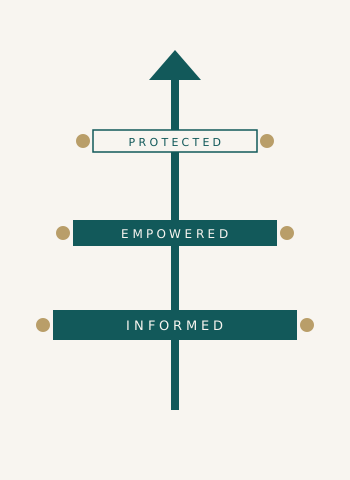
That level of governance and oversight requires far more than occasional updates and reactive conversations. It requires structured visibility over time. Good, independent visibility protects everyone — committees, residents and good building managers alike.
When performance is visible, measurable and consistently understood, conversations become less emotional, less adversarial and far more constructive. Performance concerns can be addressed early, before they become expensive, divisive or formally escalated.
Independent visibility and structured oversight are fundamental to:
- helping committees make informed decisions in the best interests of their community
- ensuring owners receive the level of service they are paying for
- protecting the standard of the environment people live in every day
- preserving pride in where people call home, and
- ultimately safeguarding the value of what is often their largest and most emotional financial investment, their home.